


What does a golf impact screen really cost?
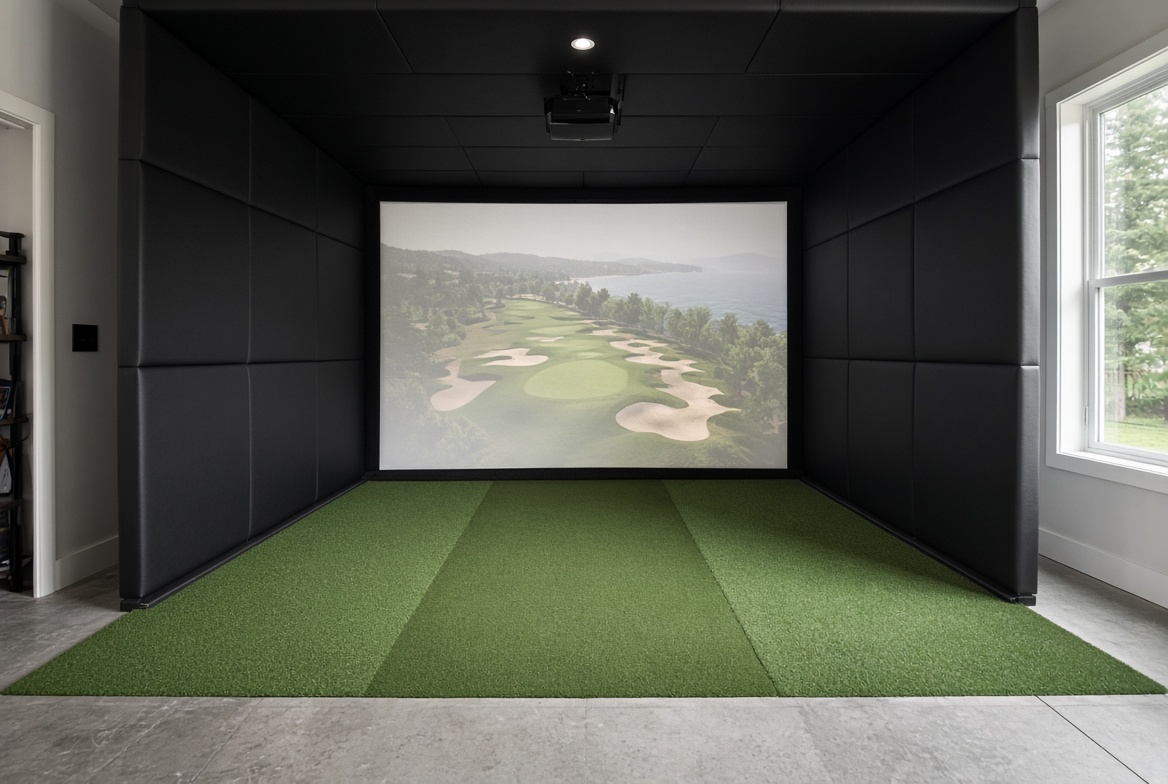
The golf simulator shopping cart has become a very strange neighborhood. One tab shows a white impact screen for less than dinner for four. Another asks several hundred dollars. A third calls its fabric “premium 3D technology” and expects you to understand what that means. Somewhere in the middle sits the screen you actually need. If you are comparing golf simulator screen prices on Amazon, eBay, Temu, Spectrum Golf, Carl’s Place, and The Indoor Golf Shop, the first question is not who has the lowest number. It is what that number includes.
Golf impact screens are unusually difficult to price-shop because width, height, finish, construction, padding, and intended use can change the quote substantially. A raw cut of material is different from a finished golf simulator impact screen with reinforced edges and grommets. A single-layer entry screen is different from a cushioned poly spacer material. A screen-only purchase is not an enclosure, and an enclosure is not a complete simulator. Ignore those differences and a comparison chart can become a perfectly formatted lie.
For a practical starting point, browse Spectrum Golf impact screens and the Spectrum Golf homepage before opening six more tabs. The point is not to buy blind. It is to establish your actual size, material requirements, and mounting method so the price comparisons finally mean something.
The October 2026 price snapshot: read the small print
As of this October 2026 research pass, Spectrum’s Poly Blend 95 product displays a range of $130 to $350, depending on selected size. Spectrum’s shop also shows Poly Spacer DIY material in a higher price band, from $499 to $729. Those are advertised starting or option-dependent amounts, not prices for one standardized 10-by-10-foot screen. They establish that Spectrum offers both accessible entry materials and more substantial constructions.
Carl’s Place impact screens show published starting prices of $179.95 for Standard, $298.95 for Preferred, $439.95 for Premium, and $449.95 for High-Contrast Gray. Carl’s describes its Premium as a three-layer polyester construction with a noise-dampening center. That makes its price ladder useful: you can see the premium charged for material class, not just brand recognition. The Indoor Golf Shop products through this retailer listing include SIG Preferred and SIGPRO screens with prices that vary by model and size.
On the marketplace side, a third-party price tracker recorded an AIKEEC screen listing around $80.99 for a listed 8.2-foot-square variant. A tracker is not a live checkout screen, and the listing mixes thickness claims in different places. Do not use it as definitive proof of cost or material quality. Prices on Amazon’s referenced product page can change by seller, color, option, and coupon. eBay prices are especially dependent on listing condition, seller identity, shipping origin, and return terms.
The reliable method is to pick one finished screen dimension and build a same-specification table: exact visible size, actual finished dimensions, number and structure of layers, edge treatment, backing requirements, delivery price, warranty, and return address. If a seller refuses to answer, that blank cell matters more than a five-dollar discount.
Why a $90 listing may not compete with a $300 screen
Imagine an 8-by-8-foot import that arrives with basic grommets. Now imagine a wider custom screen with a black border, reinforced attachment points, and a bottom sleeve for a roller or weighted bar. Both may appear under “golf simulator impact screen.” One is a fabric purchase. The other solves a room-design problem. A low-cost screen can make excellent sense for occasional, careful practice, but only when it truly fits the frame and has credible performance specifications.
A screen that is too small can leave exposed ceiling and side areas. A screen cut too wide may bunch and distort the projected image. One with inadequate mounting allowance may force the owner to improvise an unsafe attachment method. Those changes often cost more in time than they do in materials. For a home build, inspect the enclosure options and Spectrum’s screen guide before locking in screen dimensions. The frame opening and finished screen size are connected, but they are rarely the same number.
Shipping also matters. An inexpensive item with international return freight, uncertain lead times, or hard-to-reach support can become a poor bargain if it arrives damaged or incorrectly finished. On the other side, buying a high-tier triple-layer screen for a temporary backyard setup may be extravagant. The goal is correct fit and expected lifespan, not the highest invoice.
Amazon and eBay: marketplaces, not materials
Amazon is a distribution channel. It does not tell you the performance of the fabric inside the box. AIKEEC, GoSports, Aerixtron, and other sellers have different product families, specifications, and policies. Even a familiar brand name can have several sizes or revisions. Read the current specification chart, inspect photos of the actual edge finish, and ask if the published dimensions describe total fabric or playable projection area.
eBay adds another variable: identical-looking screens may be listed by the original producer, a reseller, or someone clearing inventory. A low price could reflect a legitimate sale, a returned item, or old stock. Check seller feedback in context, inspect the exact condition and shipping origin, and confirm return terms. Never assume that a product photo depicting a complete enclosure means the purchase includes the frame.
Some buyers feel reassured by a large number of reviews. Reviews are useful for detecting repeated delivery problems, inaccurate dimensions, and visible defects, but they are poor substitutes for a repeatable impact test. A screen that works for one golfer hitting occasional wedges has not automatically been evaluated for a commercial bay seeing thousands of hard strikes. Read reviews for evidence, not confidence theater.
Spectrum Golf versus Carl’s Place and Indoor Golf Shop
This is a more meaningful comparison because all three businesses offer specialist golf-screen products rather than generic home projector fabric. Carl’s provides a clearly tiered portfolio, with Standard, Preferred, Premium, and gray options. Indoor Golf Shop offers its SIG and SIGPRO families. Spectrum positions its Poly Blend 95 as an accessible single-layer option and its Poly Spacer material as a more cushioned construction. The right comparison is Spectrum’s specific product against the material class of the alternative, at the same dimensions.
For beginners with controlled ball speed and modest use, Spectrum Poly Blend 95 may be worth investigating because the site explicitly describes it for entry setups and custom finishing. For heavier or repeated strikes, compare Spectrum’s Poly Spacer choices with Carl’s Premium or SIGPRO Premium, keeping construction and backing requirements in view. You should request samples or technical documentation when image quality and sound absorption are critical. Seller descriptions establish positioning, not laboratory superiority.
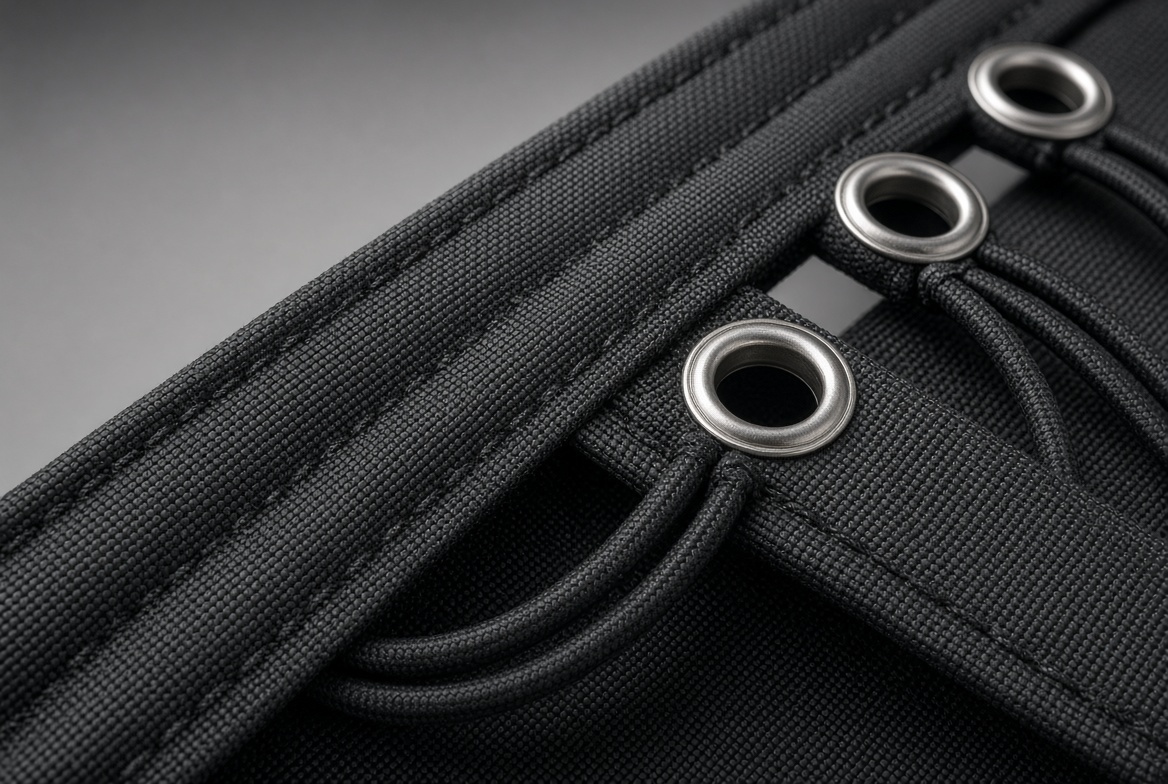
Custom work deserves its own column. Grommet spacing, webbing reinforcement, side flaps, hook-and-loop attachments, pockets, and sleeve dimensions decide whether a screen looks tidy after installation. If your frame is nonstandard, the best screen may be the one that can actually be made for that frame. The full screen buying guide explains the planning issues behind that decision.
Compare full installed cost, not merely screen cost
Put five numbers on paper: screen price, shipping and tax, frame or enclosure, padding and containment, and installation or adjustment costs. Then add a realistic replacement scenario. A $150 screen replaced twice costs $450 before lost play time or labor. A $350 screen that lasts the same period might prove cheaper, but that calculation is only valid when you have evidence about expected life in your own use case.
Do not make durability promises from a layer count alone. Screen tension, ball cleanliness, striking distance, direct contact with a hard rear wall, and impact frequency can all change wear. Dirty balls function like tiny abrasive devices. A tight screen can rebound more sharply than a correctly hung screen of similar material. A beautiful projector cannot redeem poor geometry. The equipment is a system, and the total price should be a system calculation.
Budget for top and side protection, too. A screen is not a magical force field around your entire swing path. Spectrum’s enclosure category provides context for frames and panels, while the resources overview connects to setup guidance. If the screen manufacturer recommends a backing or rear gap, follow those documented requirements rather than a universal internet formula.
How to choose the least expensive screen that makes sense
Start with the golfer. A child learning on partial swings, an adult practicing a couple of evenings weekly, and a busy indoor golf facility place very different demands on a screen. Next, measure the room while allowing for safe swing clearance, the projector image, protective side space, and any overhead hazards. Work out the required active image area and the true finished size of the fabric including borders or sleeves.
Then choose the design. A basic fixed enclosure may only need a grommeted screen with appropriate tensioning. A retractable setup might need a sewn sleeve and fabric suited to the roller hardware. A commercial bay may prioritize replacement logistics and consistent finish across multiple openings. The glamorous comparison photos say nothing about these practical details, because glamour generally ends at the grommet.
Finally, ask sellers the same questions: Can I see a cross-section? What is the exact fabric construction? Are custom widths available? What is the documented ball-speed or durability test method? Does the warranty apply to golf-ball impact, and what exclusions apply? Who pays for return shipping? What is the expected production lead time? Put answers beside prices and the ranking often rearranges itself.
Common questions about golf screen prices
Is a cheap Amazon golf impact screen automatically unsafe? No. Price and origin alone cannot establish safety. Evaluate the actual material, intended ball speed, installation requirements, and the ability to contain misses. Likewise, a premium price cannot guarantee an appropriate installation. The screen must be used with the proper safe clearances and protective structure.
Is poly spacer always better than single layer? Not universally. Spacer constructions can provide a cushioned structure and potentially improve impact acoustics and rebound behavior, but knitting, thickness, tension, and the exact product matter. A lightweight single layer may suit a lower-use, budget installation. A heavy-use facility should request documented performance data for the material it intends to buy.
Should I use Temu or eBay to save money? They are worth comparing only after you define the screen specification. A deal is meaningful when you know the finished size, included hardware, returns, and intended use. For extra context, Spectrum’s Temu screen page and cheap screen guide document the marketplace conversation, though all historical listed prices should be rechecked.
The price comparison worksheet buyers should actually use
Build a worksheet with seven columns: supplier, exact selected size, fabric construction, edge finishing, rear-clearance instructions, delivered cost, and support terms. Add a final column for your own planned use, such as casual garage practice or a high-volume commercial bay. This makes the competing offers comparable without flattening differences that matter. A $99 screen may have a smaller projection field and a plain hem; another listing might include reinforced edging, while a more expensive screen offers three-layer construction. The differences should be visible before anyone declares a winner.
Use the same questions when requesting quotes. Ask for fabric-only dimensions and finished dimensions separately. Determine the actual warranty scope, including strike-zone wear, grommet damage, and cleaning limitations. Check sales tax and delivered freight, and take screenshots of quoted options with dates. Price tables age rapidly, particularly on marketplaces, so maintain them as dated editorial snapshots rather than evergreen promises. For changes, update the table before publication and again when the post is materially refreshed.
One more useful rule: compare two budget options and two premium options instead of treating every screen as interchangeable. Evaluate Spectrum Poly Blend 95 against similar single-layer offerings; compare a genuine spacer or multilayer construction against an appropriately specified premium competitor. This preserves a fair basis for readers and provides more useful purchase guidance than a dramatic but meaningless difference in list prices.
The real winner is the screen that fits your room
A golf screen price comparison should end with a decision, not a shouting match between retailers. If you need a straightforward starter screen, compare entry materials on actual dimensions. If you play hard and often, investigate cushioned constructions and finish quality. If the opening is unusual or the bay needs a specific roller sleeve, favor the supplier that can explain the customization and make the dimensions work.
Ready to stop comparing thumbnails and start comparing genuine screen specifications? Visit Spectrum Golf’s screen selection, explore its impact screen guide, or start at Spectrum Golf with your room dimensions, enclosure type, and intended usage. Ask for the best-fit construction and finished-edge configuration. The correct screen should survive your swing, display your course, and leave you with money for the thing the golfer really wants: another round.