


Temu, AIKEEC and Aerixtron Golf Screens: Claims, Costs and the Real Buying Questions
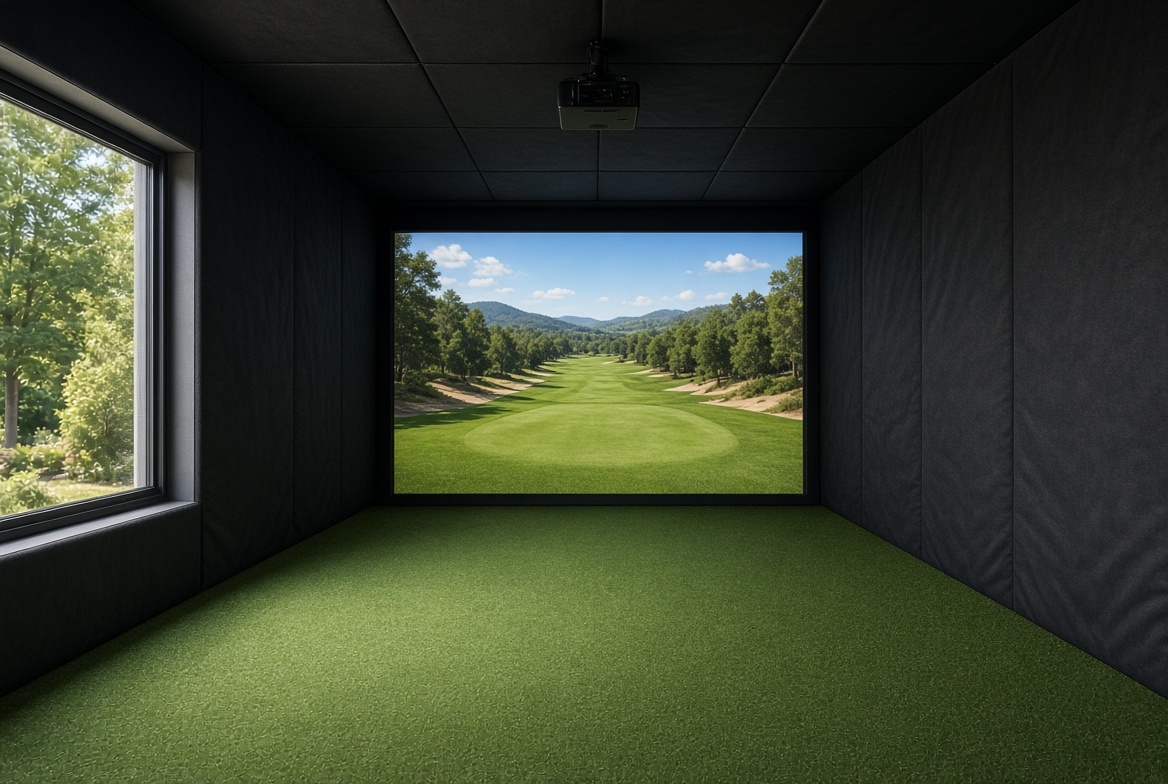
Temu, AIKEEC, Aerixtron and the new low-price golf screen market
A budget golf impact screen used to be an unexciting subject. Now it has become an international arms race involving marketplace coupons, dramatic fabric terminology, and product titles long enough to qualify as short novels. Temu, AIKEEC, Aerixtron, Khampa, and other brands appear in searches for cheap golf simulator screens because shoppers are building more DIY hitting bays and trying to control the cost. That competition is real, and dismissing every imported golf screen would be lazy analysis.
The sensible question is what the buyer gets. Can the fabric stop a real golf ball repeatedly? Is its surface suitable for projection? Does it have a stable knitted construction? Can you hang it with the right amount of movement behind it? What does “fireproof” mean on that exact item? These details are worth more than a five-star icon floating beside an unverified 3D fabric claim.
Spectrum already discusses the trend on its Temu Golf Screens page and golf impact screen category. This update brings the focus back to testable specifications, responsible comparison, and the kind of setup that works after the delivery driver leaves.
Price pressure is real, and buyers are responding
On Spectrum’s existing Temu page, examples of overseas screens are described at prices dramatically below specialist screens. Those are historical price observations, not current quotations. An independent tracker recently showed an AIKEEC listing near $81 for an 8.2-foot-square model, while Carl’s Place publicly lists entry impact screens starting at $179.95. Product sizes and materials differ, so lining up those prices without qualifications tells us little except that the marketplace is crowded.
The low price is often possible because the item is manufactured in standardized dimensions, offered with a fixed finishing style, and sold through a broad marketplace. That can be efficient. It can also leave the buyer doing their own design work: figuring out border width, choosing the right grommet count, confirming replacement policy, and resolving shipping issues. Not everyone needs a custom screen, but anyone buying one should understand what the customization fee solves.
Spectrum has responded with lower-priced options, including Poly Blend 95, while retaining higher-end poly spacer and DIY products. The sensible editorial position is not that price competition is evil. It is that shoppers deserve a clear statement of tradeoffs. A lower price is a benefit. A poorly documented impact screen is an unknown.
What 3D poly spacer actually means
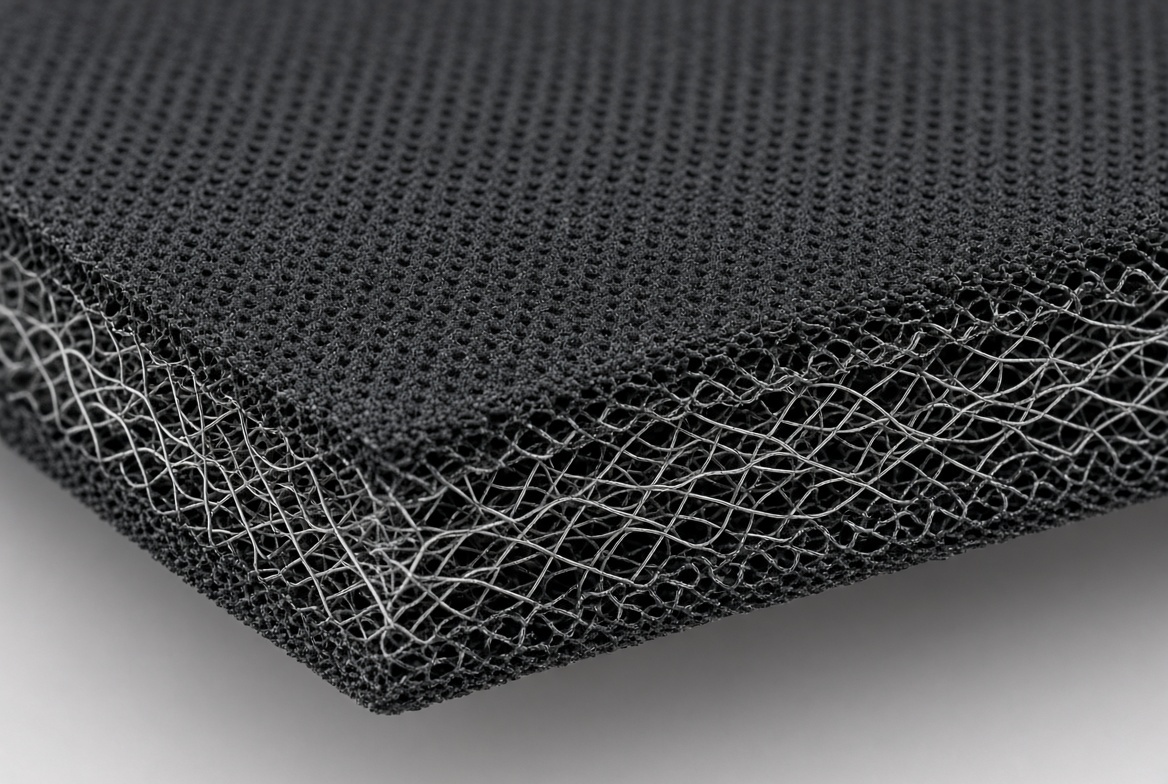
The term “3D” can describe a genuine textile structure: two fabric faces held apart by connecting yarns, producing an airy spacer fabric with measurable thickness and compression behavior. It does not mean three-dimensional projected golf images or a magical pixel-boosting layer. The engineering questions are thickness, yarn material, knit density, how the faces are joined, and how repeated impacts change that structure. Some sellers use the phrase as a category label without publishing the measurements behind it.
The same problem appears with the word “triple-layer.” Three distinct laminated or knitted layers are not automatically identical to a three-dimensional spacer knit. One design may have separate surface and backing layers; another has faces connected with internal filaments. Both can work, but their bounce characteristics, acoustic behavior, and finishing requirements need evidence. The screenshot of a cross-section is useful only if it depicts the exact product being sold.
Ask for basis weight, actual thickness with the measurement method, finishing details, and photographs of a cut edge. Better still, request a material swatch. If you own a simulator business or hit hundreds of balls weekly, a fabric sample and transparent test information are more valuable than a dozen generic badges saying “heavy duty.” See the wider materials guide for the performance questions that matter.
Fireproof is a claim that requires paperwork
Some imported golf screen advertisements use “fireproof,” “fire retardant,” or similar labels. These phrases are not interchangeable. A textile may be flame resistant under a particular test protocol while still being combustible under different conditions. Fire-resistant performance can also depend on coatings, laundering, age, assembly, and the installation environment. A simple product title cannot tell a commercial facility what a fire official will accept.
If a vendor advertises flame performance, ask for a test report or certificate naming the exact finished textile and the standard used, such as NFPA 701 when applicable to hanging textiles. Check the test laboratory, report date, product identification, and whether the report covers the supplied configuration. Local codes and the authority having jurisdiction determine the actual requirements. A certificate for a vaguely similar curtain does not certify every golf impact screen from the same marketplace seller.
For a home user, flammability still matters, especially around electrical equipment and heaters. For a commercial indoor golf facility, documentation should be part of purchasing records before opening. Refer to NFPA for background on applicable safety standards and work with your local code official. This article does not designate any named competitor product fire-safe or fire-unsafe without material-specific test evidence.
The real performance tests are less glamorous
A screen must absorb impact while containing the ball. Its performance is influenced by fabric construction, how it is mounted, the space behind it, and the ball’s speed and condition. The same textile can behave differently when stretched drum-tight than when allowed to deflect as specified. Anyone promising “zero bounceback” in every installation is trying to sell physics a new contract.
For projection, surface uniformity and texture matter because the projector displays light on the front face. A smooth white face may look more even than a coarse knit, but ambient light, projector output, throw geometry, and image scaling can overwhelm a modest fabric difference. A gray screen can improve perceived contrast in some brighter environments while reducing reflected brightness. These are system-level choices, not automatic endorsements of a brand.
For longevity, monitor the high-wear strike zone, seams, grommet deformation, and the screen’s behavior over time. A published “100,000 shots” statement is only as useful as its documented test setup: ball speed, strike pattern, replacement criteria, and mounting tension. Ask the seller what was actually measured. If the claim cannot be explained, treat it as marketing language rather than engineering evidence.
Where overseas screens can make sense
A standardized overseas golf simulator screen may be reasonable for a low-use home practice bay with a well-designed containment system, especially if dimensions and mounting hardware match the existing frame. Some buyers will be entirely satisfied. Others may prefer to save money initially and replace the fabric once they understand their practice routine. That can be a rational plan when the installation is safe and the buyer accepts the tradeoffs.
The economics change for custom openings, high-frequency use, multiple simulator bays, and businesses where downtime becomes expensive. In those cases, documented material availability, consistent sizing, and rapid replacement capability may matter more than the lowest ticket price. A screen that is two inches short in a finished commercial wall is a construction problem, not a minor cosmetic annoyance.
Buyers should also think about accessibility of customer support. Can the seller talk through a side-sleeve configuration or explain the difference between visible projected size and finished fabric size? Are replacement panels offered? Is the return address domestic? These questions have boring answers, which is precisely why they rarely appear in splashy listings.
AIKEEC, Aerixtron, Khampa and Temu: evaluate the listing, not the logo
AIKEEC is associated with an Amazon product listing describing a thickened impact screen. A third-party tracker duplicates that listing, but its title and specification paragraphs contain different thickness descriptions. That inconsistency is a reason to request clarification, not to pronounce the screen defective. When shopping by ASIN, verify the exact selected variation because Amazon variants may share reviews despite different dimensions.
Aerixtron appears in marketplace comparisons, but a brand name and displayed price do not reveal the precise knit, finished size, or ball-speed test. The same caution applies to Khampa and the range of listings found through Temu. Compare exact seller and model numbers. Inspect the return policy, warranty language, accessories, and material specifications on the day you plan to buy.
Beware of geographic assumptions. A brand sold on an international marketplace is not proof that every product under that brand has one country of origin, and US distribution is not the same as US manufacturing. Request country-of-origin information if it matters to your purchase. Judge an offer by evidence, suitability, service, and total cost rather than an easy stereotype.
How Spectrum’s two material tiers fit the conversation
Poly Blend 95 is positioned by Spectrum for value-minded indoor golfers and entry-level installations, with custom sizes and multiple finishing options. Its online description includes ball-speed and durability statements made by Spectrum; those are manufacturer claims rather than independent results confirmed here. Shoppers should still match the product to their intended use and installation conditions.
Spectrum also lists Poly Spacer DIY impact screen material, which serves buyers interested in more substantial spacer constructions. When comparing it with an imported 3D spacer claim, request the same information from both sellers: thickness, finished size, face construction, edge finish, ball response, shipping, and support. The word “spacer” is not a substitute for a fair comparison.
The golf enclosure products matter as well. A fabric decision made before considering top panels, side protection, and frame layout can become an expensive redesign. If the golfer has a fixed opening, a retractable frame, or an unusual ceiling, custom finishing may have more value than a particular fabric slogan.
A smarter imported-screen checklist
Before buying, write down the exact opening and safe clearances. Ask if the advertised dimensions include black edging or apply only to the white projection field. Confirm grommet spacing and reinforcement, specify mounting hardware, and check whether the seller recommends a rear safety net or minimum rear gap. Request care instructions and establish how damaged deliveries are resolved.
For commercial purchasers, add flame-test documentation if required by local codes, a reproducible product specification, and evidence of replacement availability. If a facility plans to operate multiple bays, order matching samples and develop a consistent repair schedule. No screen is indestructible. The sensible operational question is how predictably it can be inspected and replaced.
Finally, document the projector and intended aspect ratio. A cheap 1:1 screen paired with a 16:9 projector may produce an awkward image, while a premium widescreen material in a narrow room may waste projection width. Follow Spectrum’s screen sizing resource instead of forcing the image to match a listing that happens to be on sale.
What to request from an overseas-screen vendor before ordering
Ask the seller to identify the factory model, yarn or fiber composition, nominal fabric thickness, finished size, and the precise meaning of its multilayer or 3D language. Request close photographs of the actual stitching and reinforced corners. If the listing references a ball-speed limit, ask for the test method. If it references a fire classification, request the report for the exact supplied fabric and confirm with the authority governing your installation. A seller may have all of these documents, some of them, or none. The point is to discover which facts you are buying.
For imports, also confirm the return destination, the circumstances under which return postage is covered, the process for damaged deliveries, and the options for replacing a single panel without purchasing a whole enclosure. Compare the offered screen with Spectrum’s Poly Blend line and spacer-material choices on an identical size and mounting basis. A fair comparison gives budget manufacturers credit where deserved while making the cost of missing information visible to readers.
Finally, do not publish customer-submitted videos or informal tests as if they were independent lab certifications. A video can show one setup working, but it rarely specifies striking speed, fatigue exposure, environmental conditions, or a failure definition. Readers benefit from knowing what a video demonstrates and what it cannot establish. That distinction makes the page more useful than another recycled list of marketplace slogans.
Buy based on evidence, not adjectives
The arrival of lower-cost golf impact screens is healthy competition. It pushes established businesses to explain what customers gain from materials, construction, support, and customization. That is better for golfers than a marketplace shouting contest. The buyer’s job is to refuse comparisons that hide dimensions or treat unverified safety claims as established facts.
Start with Spectrum Golf and browse its impact screens alongside the Temu comparison resource. Ask for the precise custom size and screen construction that works for your space. A buyer who knows the specifications can choose a budget import, a domestic value product, or a premium spacer screen with confidence. The win is a safer, better-fitting simulator, not merely the lowest number on the checkout page.